How Grand Prix 2D Was Built
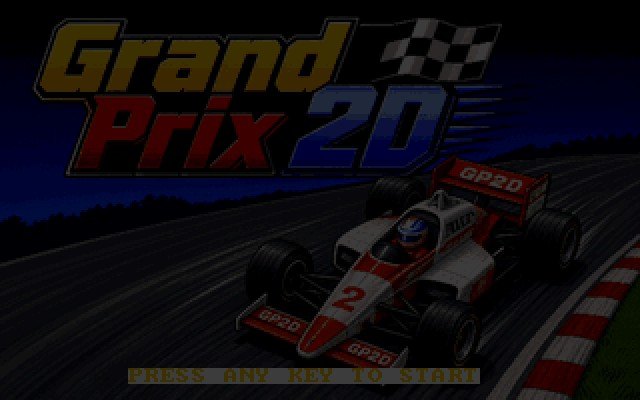
Grand Prix 2D started as a simple idea: build a small racing game that feels like it could belong on an old DOS machine, while still being developed with a modern workflow and tested on real retro hardware.
The goal was not to create a modern racing simulation. The goal was to make a compact, readable, fast and charming top-down racing game with visible pixels, simple controls and a strong 1990s DOS atmosphere. Every part of the game is built around that constraint.
From tools to game
Before the game itself could grow, the lab needed tools. That is where the PixelStudio toolset became important. Pixel editing, sprite editing, map editing and small conversion utilities made it possible to create game assets in a workflow that fits the DOS development style.
The track is built from tiles. Cars are sprites. The map is stored as simple data. This makes the game easier to understand, easier to debug and suitable for small releases on floppy disk.
Choosing the style
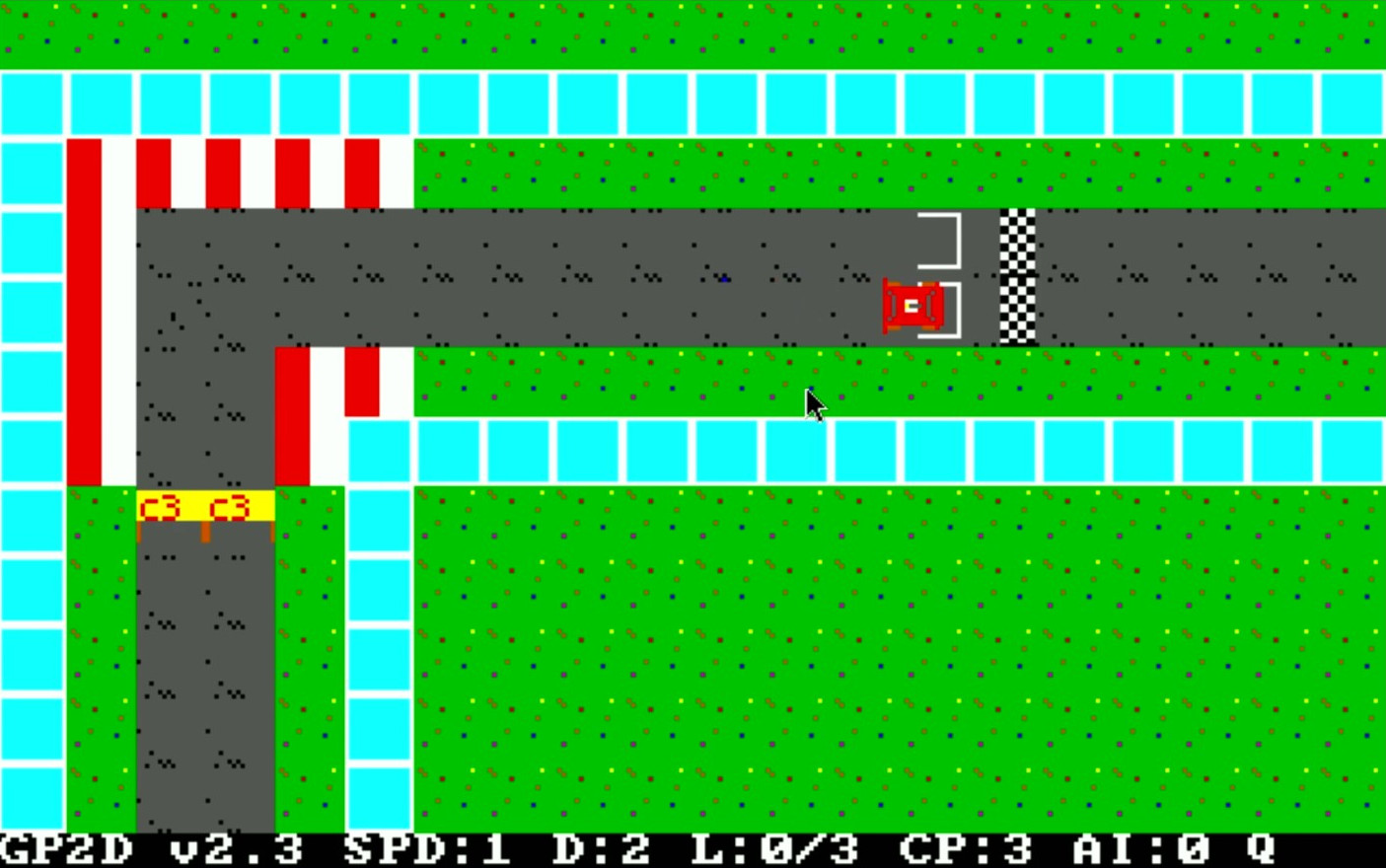
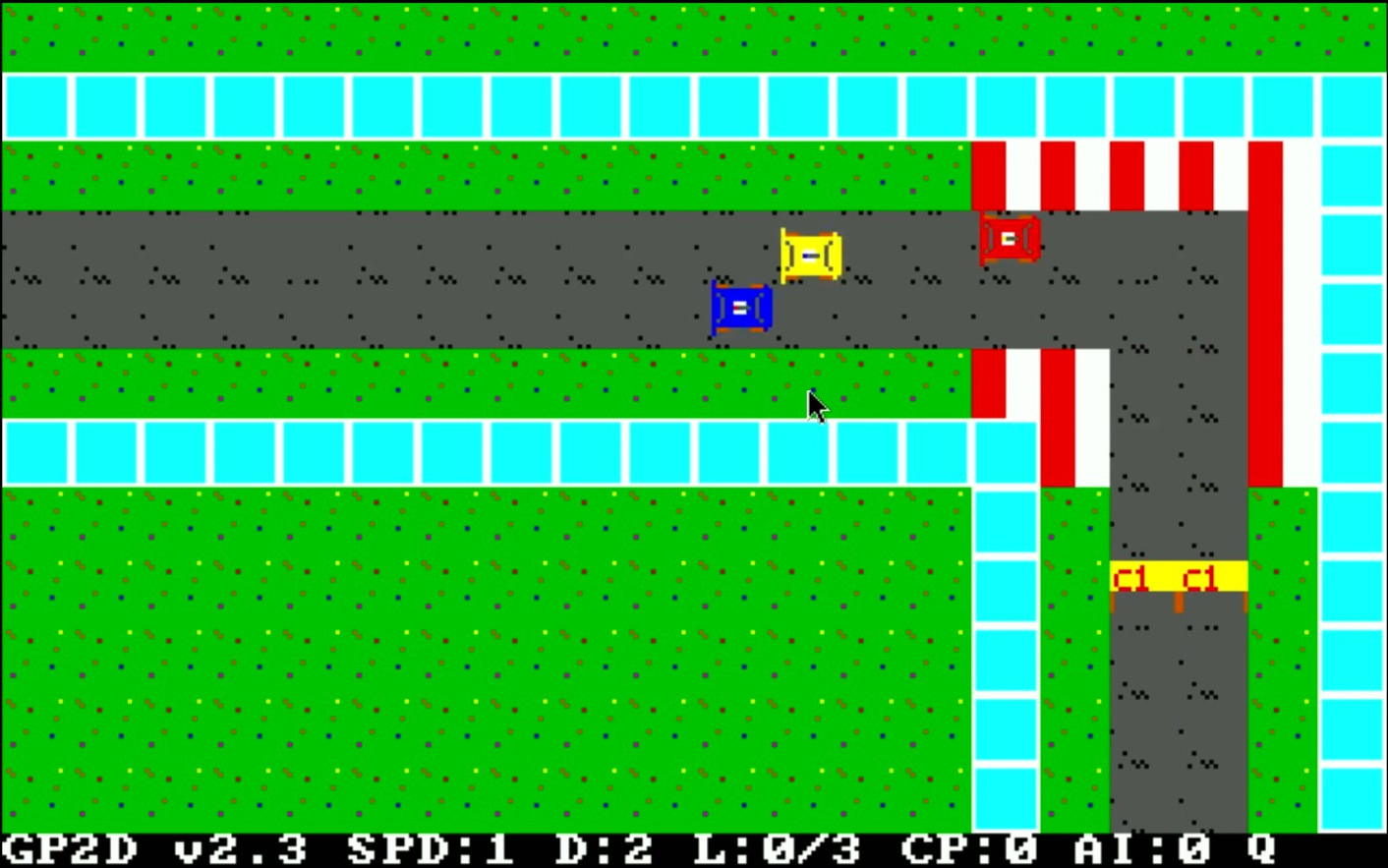
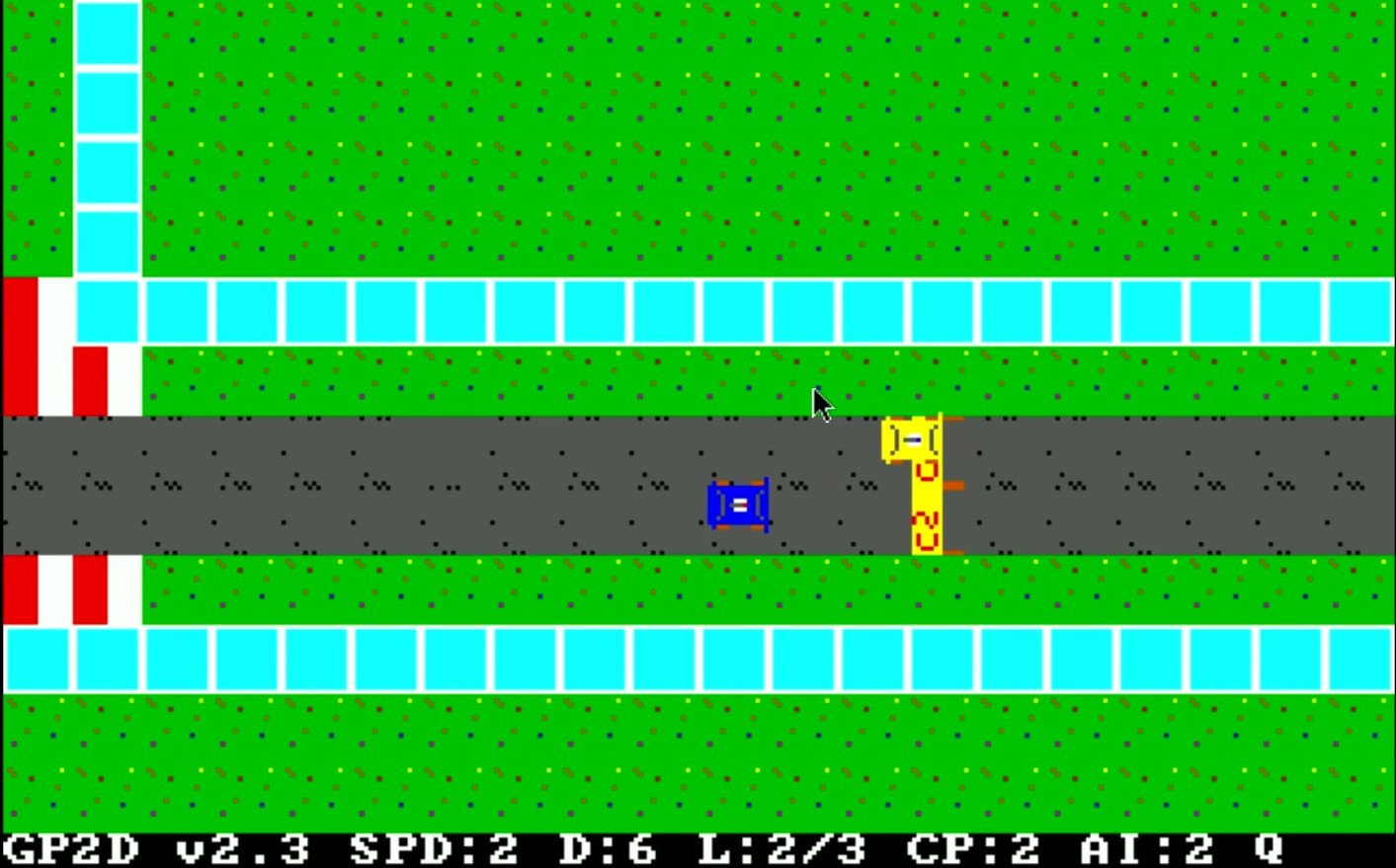
The first visual direction was intentionally direct: green grass, grey asphalt, white-and-red barriers, cyan track borders and brightly colored cars. The graphics are not trying to hide their limitations. They use them as part of the identity.
Core gameplay
The current version already includes the main building blocks of a complete race: scrolling track movement, a player car, AI opponents, lap counting, checkpoint logic and a loading screen. These systems are deliberately simple, but they create the foundation for a complete DOS racing game.
The checkpoint system is especially important. The finish line should not count unless the player has actually driven through the required checkpoint. That makes the track feel more like a race and less like a loose driving toy.
Real hardware matters
Grand Prix 2D is not only tested in DOSBox. It is meant to run on real old hardware too. That changes the way the game is developed. Redrawing the screen, scrolling the camera, handling controls and keeping the game responsive all become practical problems, not just theory.
When the game runs on a real 1990s PC, small details suddenly matter: input delay, screen flicker, loading behavior, file names, memory use and the general feeling of speed. These tests help shape the project into something that belongs to the machine it targets.
What comes next
The next steps are to improve the AI behavior, polish the track flow, add more presentation screens, prepare a downloadable package and eventually build a proper disk release with cover art and documentation.
Grand Prix 2D is still in development, but it already represents the main idea behind Fantasy Foundry Retro Lab: small retro projects built with care, real tools, real constraints and a lot of old-school spirit.